

Why this project matters
Waste management challenges do not stop at borders. In the Pécs-Osijek region, the project used cross-border cooperation to examine how neighbouring areas could learn from each other and jointly improve waste management practices. This was important because circular economy and bio-waste solutions require both professional coordination and citizen participation. The project went beyond a one-off awareness campaign by combining household-level tools, stakeholder exchange and strategic guidance that can inform similar initiatives elsewhere.Waste management challenges do not stop at borders. In the Pécs-Osijek region, the project used cross-border cooperation to examine how neighbouring areas could learn from each other and jointly improve waste management practices. This was important because circular economy and bio-waste solutions require both professional coordination and citizen participation. The project went beyond a one-off awareness campaign by combining household-level tools, stakeholder exchange and strategic guidance that can inform similar initiatives elsewhere.
Capitalisation
Capacity building relevant
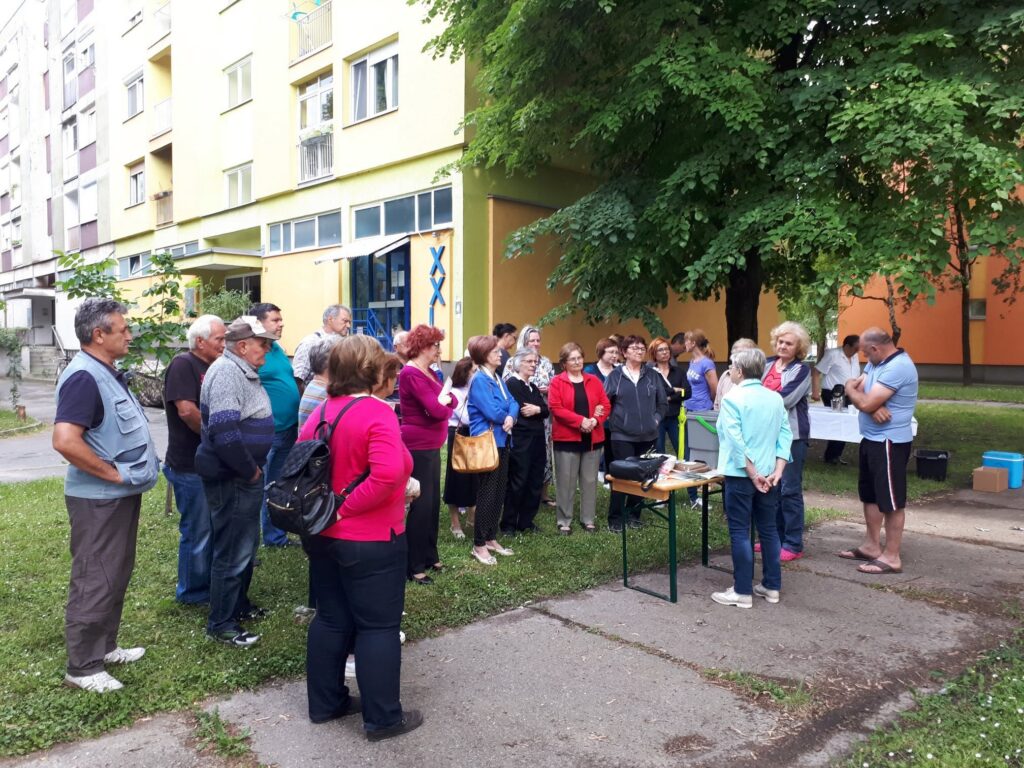
The project strengthened the capacities of waste management organisations and local communities through professional exchange, workshops and citizen education. At least 250 people received training on separate waste collection and composting.
Scalable / Replicable model
The project combined household bio-waste infrastructure, citizen engagement and joint professional guidance in a model that can inform similar initiatives in other municipalities and cross-border regions.
Project type
Last Mile projects
The project translated circular economy objectives into practical local action by distributing 3,617 bio-waste bins and providing composting guidance to more than 2,400 residents.
Achievements
The project combined practical household support, citizen education, professional exchange and joint planning to improve bio-waste management in Pécs and Osijek.
- Bio-waste collection improved: A total of 3,617 bio-waste bins were distributed to households in the two cities, providing residents with practical infrastructure for separating and composting organic waste.
- Residents received practical guidance: At least 250 people took part in training on separate waste collection and composting, while more than 2,400 households received home-composting guidance.
- Waste-management professionals exchanged knowledge: Networking events and a study tour connected organisations from both sides of the border and supported shared learning on circular-economy practices.
- Joint guidance was developed: The project analysed waste management in the border region and produced guidelines with recommendations on circular-economy development and potential cross-border cooperation.
- Cooperation between key organisations was strengthened: Waste-management companies and regional-development organisations from Hungary and Croatia worked together on practical and strategic responses to shared waste-management challenges.
What can be reused
The main transferable value of 2Regions2Sustain lies in the combination of concrete household-level outputs, professional cooperation and strategic guidance. Other regions can use the project as a model for linking citizen engagement with more coordinated waste management planning.
Reusable resources
1. Home composting guide
Reusable concepts
- Helping households separate bio-waste: Practical equipment, clear guidance and awareness-raising activities make separate collection and home composting easier for residents.
- Learning from practices across the border: Networking events and study visits allow waste-management professionals to compare experiences and identify opportunities for cooperation.
- Connecting different areas of expertise: Waste-management companies, urban-development organisations and regional-development agencies work together, linking practical experience with longer-term planning.
- Connecting local action with wider waste-management goals: Household bio-waste collection and composting activities contribute to broader circular-economy and cross-border waste-management objectives.